
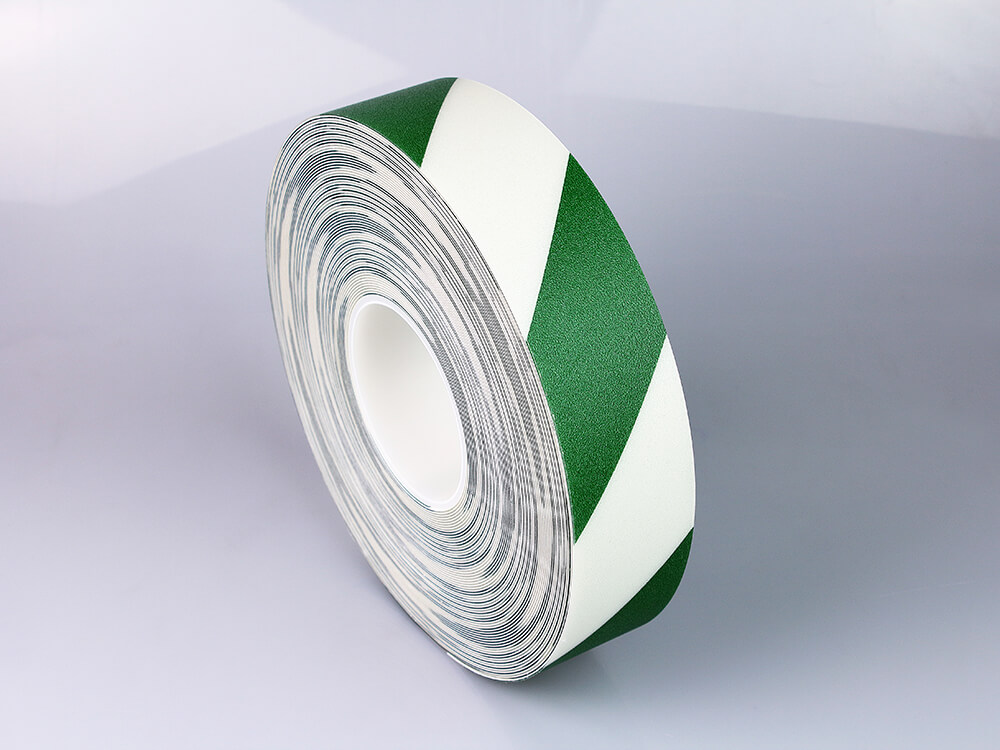
Due to popular demand, green and white hazard PermaRoute has now been approved for general manufacture

Green and White Hazard PermaRoute for Clear Workplace Demarcation
Clear visual communication is essential in warehouses, factories, healthcare environments and other busy workplaces. Employees and visitors should be able to identify important routes, equipment locations and operational zones quickly, without relying solely on written instructions.
Following customer demand, green and white hazard PermaRoute was added to the PermaRoute floor-marking range. The contrasting striped design provides a distinctive option for workplace demarcation, particularly around first aid stations, treatment areas, fire exits and breathing apparatus locations.
Green and white hazard tape can be incorporated into a wider visual-management system using lines, shapes, signs and colour-coded zones. However, the meaning assigned to the tape should be documented clearly and used consistently across the site.
What Does Green and White Tape Mean?
Green and white is commonly associated with safe conditions, emergency facilities and first aid information. The Health and Safety Executive states that first aid boxes should display a white cross on a green background. First aid rooms should also be identifiable using white lettering or a white cross on green.
Green and white floor tape may therefore be used to support the identification of areas such as:
- First aid stations
- Treatment rooms
- Emergency equipment points
- Breathing apparatus storage
- Emergency exit routes
- Welfare or medical areas
- Locations containing first aid supplies
The tape can create a visible boundary around these areas or provide a route leading towards them. This is why green and white floor marking is sometimes searched for as first aid tape.
In this context, first aid tape means floor-marking material used to identify a first aid location. It should not be confused with medical adhesive tape used for dressings or clinical treatment.
Green and white striped tape does not automatically have one universal meaning in every workplace. A business should define its colour system, communicate it to employees and ensure it does not conflict with recognised safety signs. The tape should support formal signage rather than replace it.
What Is Green Warning Tape?
The phrase “green warning tape” is sometimes used when searching for green floor markings, but it is not technically the most accurate description.
Under UK workplace safety-sign guidance, warning signs are generally triangular and use a black pictogram on a yellow background. Green signs are instead associated with emergency escape, first aid and safe-condition information.
Green and white tape can still draw attention to an important location, but it would normally indicate a safe-condition or emergency-support area rather than warn people about a danger.
For example, it may be used to:
- Surround a first aid point
- Define access to an emergency exit
- Mark the location of medical equipment
- Create a route towards a treatment area
- Identify a zone that must remain unobstructed
- Separate an emergency facility from surrounding storage areas
Where a significant hazard remains after other controls have been introduced, appropriate safety signs must be clear and legible. Employers should also explain unfamiliar signs and markings to employees.
What Is Hazard Tape Used For?
Hazard tape is used to create visible boundaries and communicate that a particular area requires attention. Different colours and patterns can be assigned to different operational purposes.
Common applications include:
- Defining pedestrian routes
- Marking vehicle lanes
- Identifying restricted areas
- Surrounding emergency equipment
- Creating keep-clear zones
- Marking storage and pallet locations
- Separating work cells
- Highlighting entrances and exits
- Identifying first aid and treatment areas
- Supporting 5S and visual-management systems
Striped tape provides greater visual contrast than a single solid colour. This can make the boundary more noticeable, particularly where several different floor-marking colours are already used.
Hazard tape should form part of a broader safety and operational system. It does not replace risk assessments, physical barriers, training, traffic-management procedures or legally required safety signs.
The HSE recommends using route markings to show traffic lanes, route edges, stop lines, pedestrian crossings, junction priorities and areas where parking is prohibited. Markings and signs should remain visible and be positioned so that drivers and pedestrians can understand them in sufficient time to act.
Green and White PermaRoute Applications
Green and white PermaRoute can be used wherever a business needs distinctive, durable demarcation around safe-condition or emergency-support areas.
First Aid Stations
A first aid station should be easy to locate, particularly during an emergency. Green and white PermaRoute can be installed around the station to distinguish it from nearby storage, machinery or production areas.
The floor marking can be combined with compliant wall-mounted first aid signs. This creates both an elevated visual reference and a clear boundary at floor level.
Treatment Areas
Manufacturing plants, warehouses, sports facilities and large commercial premises may contain designated treatment rooms or medical assessment areas. Green and white tape can define the entrance or the floor area immediately surrounding the facility.
Emergency Equipment
The tape can help identify the position of breathing apparatus, emergency response equipment or other resources that must remain accessible.
A clearly marked boundary can also discourage pallets, bins, machinery or temporary stock from being placed directly in front of the equipment.
Emergency Routes and Exits
Green and white floor markings may be incorporated into routes leading towards emergency exits. They should be used alongside appropriate escape signs and the organisation’s wider emergency plan.
First Aid Supply Storage
Where first aid equipment is stored in a larger warehouse or production area, green and white first aid tape can provide additional floor-level identification. This can be particularly useful where wall signs might be partially obscured by racking, equipment or changing stock levels.
Why Use PermaRoute Hazard Tape?
PermaRoute is a layered floor-marking product consisting of a printed PVC layer, a protective clear laminate and a strong pressure-sensitive adhesive. The laminate protects the printed colour beneath it from routine scuffs and abrasion. The material has a low-profile construction with a stated thickness of approximately 960 microns.
The green and white pattern is printed beneath the transparent upper laminate. This differs from basic surface-printed marking tapes, where the design may be directly exposed to traffic and cleaning.
PermaRoute is designed as a wider warehouse and factory floor-marking system. Straight rolls can be combined with arrows, corners, letters, numbers, footprints and other die-cut shapes to create a coordinated visual layout.
Standard roll options include:
- 50 mm width
- 75 mm width
- 100 mm width
- 30 metre roll length
Custom widths and shapes may also be available depending on quantity and manufacturing requirements. PermaRoute carries a conditional two-year guarantee, subject to the application conditions and limitations specified by the manufacturer.
How to Apply Green and White Hazard Tape
Correct preparation is essential for dependable adhesion.
Before installation:
- Confirm that the floor is smooth, stable and suitable for self-adhesive tape.
- Remove dust, dirt, grease, oil and cleaning residue.
- Allow the surface to dry completely.
- Repair loose paint, damaged coatings or unstable concrete.
- Measure the required area and establish straight reference points.
- Apply the tape gradually without stretching it.
- Use firm, even pressure across the entire surface.
- Check that all edges, joins and corners are fully bonded.
PermaRoute can be used immediately after application because there is no paint or resin curing period. This can reduce disruption when marking operational warehouses, factories and treatment facilities.
A trial installation is advisable where the floor has an unusual coating, experiences intensive cleaning or is exposed to oils, chemicals or heavy wheeled traffic.
Creating a Consistent Demarcation System
Colour coding is most effective when every colour has a clear and documented purpose. Employees should not have to guess whether green and white tape identifies first aid, an escape route, emergency equipment or another facility.
Before installation, businesses should:
- Define the meaning of each colour
- Record the system in site procedures
- Include it in employee induction
- Place explanatory signage where necessary
- Avoid assigning the same colour to conflicting uses
- Inspect markings regularly
- Replace damaged or obscured sections
Green and white PermaRoute can provide an effective method of identifying first aid points, treatment areas and emergency-support facilities. Its contrasting design supports clear demarcation, while its laminated construction is designed for industrial floor-marking applications.
For workplaces seeking durable green and white hazard tape or floor-level first aid tape, samples can be tested on the intended surface before a full installation is completed.